
Lisa Uhlman
(
ASX:AS2
)
Askari Metals uncovers high-grade copper mineralisation at Nejo Gold Project, Ethiopia
Last updated: 12:28 18 Jul 2025 AEST, First published: 11:28 18 Jul 2025 AEST
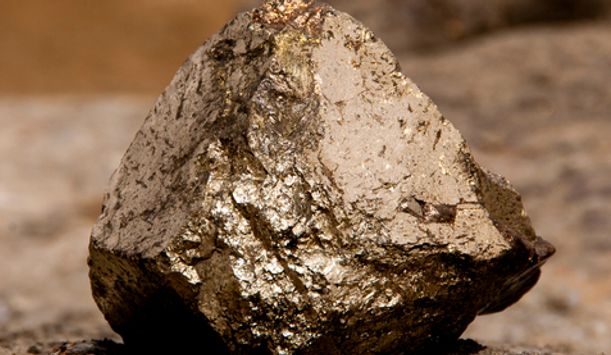
Askari Metals Ltd (ASX:AS2) has announced a significant discovery at its Nejo Gold Project in Ethiopia, revealing high-grade copper mineralisation at the Katta Target. Historical drilling results have demonstrated substantial copper intercepts, highlighting the project’s potential as a dual copper and gold exploration asset.
The company’s historical exploration data compilation program revealed the Katta Target, located within the 1,174-square-kilometre Nejo Gold Project, has yielded promising intersections, adding to the growing portfolio of copper and gold resources within the project and setting the stage for modern exploration to fully unlock its value.

Location diagram of the Nejo Gold Project showing the position of the Katta Target within the northern exploration licence, approximately 5km from the town of Nejo.
High-grade copper intersections confirm mineralisation potential
Historic drilling at the Katta Target, a key area within the Nejo Gold Project, has identified substantial copper mineralisation. Key results include:
- 14.33 metres @ 3.2% copper (Cu) at a depth of 25.3 metres (UNDP_03)
- 35.51 metres @ 0.82% Cu from 152.55 metres’ depth (UNDP_04)

Cross section of UNDP_03 and UNDP_04 diamond drillholes within in the Katta 2 Target Area at the Nejo Gold Project, Ethiopia. UNDP_03 and UNDP_04 were drilled in 1972 to test copper and other base mineral potential in the area and to determine the geological environment hosting the different types of mineralisation. Sourced from Kefi Minerals plc, NewGenGold Conference 2017 presentation, Tula Kapi Gold Project: A History of “Repeated” Discoveries in Western Ethiopia.
In addition to these high-grade intersections, historic exploration has uncovered six copper-bearing gossans at the Katta 2 Target. One of these gossans has a strike length of more than 600 metres, remains open along strike and at depth, and is up to 30 metres wide.
Askari is now planning follow-up drilling, leveraging modern techniques to expand upon these initial results.
Exploring untapped mineralisation potential
The Nejo Gold Project, located in the highly prospective Arabian-Nubian Shield, remains largely underexplored despite a rich history of exploration. Prior work by the United Nations Development Programme (UNDP) and other agencies identified high-priority targets, but limited follow-up has prevented the full potential of the project from being realised.
“Validating our acquisition strategy by analysing and digitising the historical exploration data has been our first priority at Nejo,” Askari executive director Gino D’Anna said.
“The copper and base metal mineralisation data from our Katta Target, located on the northern-most licence, includes historical diamond drilling completed by UNDP between 1967 and 1973,” he explained. “Despite these high-grade intercepts across wide thicknesses, there is an absence of systematic exploration, and this is a key opportunity for Askari Metals to unlock the potential of these targets through modern, systematic and focused exploration.”
Pathway to maiden JORC resource
The project’s scale and the historical data available make it a promising candidate for a near-term JORC (2012) mineral resource estimate.
Askari is focused on systematically advancing the project with the goal of defining a maiden JORC resource. It has outlined a clear exploration strategy, which includes high-resolution magnetic surveys, trenching, soil sampling, and additional drilling.
“Nejo is a district-scale advanced brownfields gold and copper project and offers everything we look for in a flagship asset — scale, high-grade gold and copper upside, proven mineralisation, and proximity to major gold operations on a globally significant greenstone belt,” D’Anna said.

Map depicting the locality of the Askari Metals’ Nejo Gold Project in relation to the major mineral deposits of the Arabian-Nubian Shield.
A growing portfolio in Southern Africa
Alongside the Nejo Gold Project, Askari Metals is progressing its Uis Lithium Project in Namibia and the Matemanga Uranium Project in Tanzania. These assets, located in the heart of Africa’s resource-rich regions, reinforce Askari’s position as a diversified exploration company targeting high-demand minerals.
The company is now preparing to undertake detailed exploration work across several target areas, including Katta, Katta 2, and Katta 2 South. The upcoming exploration program aims to prioritise high-potential drill targets, with systematic follow-up drilling planned across the project area.
“We are excited to unlock the full potential of this project and deliver meaningful exploration milestones in the near term and emerge as a major African gold and copper developer,” D’Anna said.
Written by:
Lisa Uhlman
About this contentDisclaimer
No investment advice
Share article
(
ASX:DYM
)
Dynamic Metals progresses gold exploration with encouraging results at Widgiemooltha
Last updated: 17:51 18 Jul 2025 AEST, First published: 13:51 18 Jul 2025 AEST
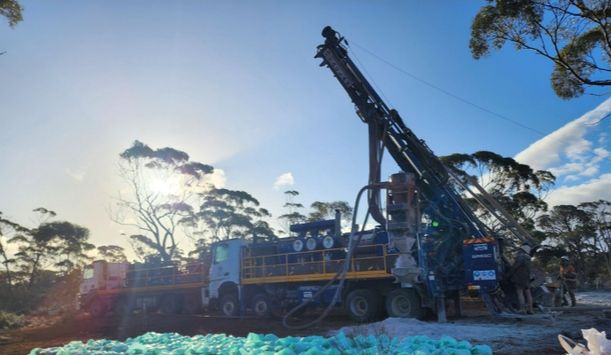
Dynamic Metals Ltd (ASX:DYM) has provided a positive update on its ongoing exploration activities for the June 2025 quarter, with significant progress made at the Widgiemooltha Gold Project in Western Australia.
The company reported encouraging results from its reverse circulation (RC) drilling at the Cognac West Gold prospect, alongside progress at other key areas like Chalice South and Courvoisier. These developments highlight the project’s continued potential as Dynamic works to unearth value across the highly prospective region.
Encouraging results at Cognac West
The Cognac West Gold prospect has been a focus of Dynamic Metals’ recent exploration efforts. The company’s Phase 1 and Phase 2 RC drilling programs have revealed positive results, underscoring the gold mineralisation potential in the area.
Phase 1 drilling, which involved 32 angled RC holes, returned promising gold intercepts. Notable results include:
- 8 metres @ 2.87 g/t gold (Au), including 4 metres @ 5.37 g/t Au from 60 metres in WDR041; and
- 44 metres @ 0.33 g/t Au, including 4 metres @ 1.21 g/t Au from 36 metres in WDR034.

Plan view of Cognac West prospect area with completed drill holes from Phase 1 drilling highlighted in black.
These early results indicate the presence of significant gold mineralisation across the prospect, with both broad low-grade and narrower higher-grade zones identified.
The Phase 2 drilling program, which commenced in late May, aimed to extend these results and further refine the geological model for gold mineralisation across both Anomaly A and Anomaly B. Assay results from Phase 2 are pending, but the Phase 1 findings have set a strong foundation for further exploration.

Plan view of the Cognac West Prospect with recently completed Phase 2 drill holes highlighted in blue.
Advancing exploration at Chalice South
The Chalice South prospect, south of the Chalice Gold Mine, has also attracted significant attention.
Dynamic has received approval for a 13-hole RC drilling program targeting gold anomalies defined through 3D geological modelling using historic data. This drilling program is designed to test multiple prospective targets and is scheduled for completion in the September quarter of 2025.

Plan of proposed drilling at Chalice South.
Chalice South shares similar structural geology to the Chalice Gold Mine, which has produced significant gold deposits in the past. The upcoming drilling will provide key insights into the area’s potential.
Progress at Courvoisier and next steps
The Courvoisier gold prospect, located 4.4 kilometres north of Cognac West, also saw progress during the quarter with a comprehensive soil sampling campaign. The soil samples have been submitted for multielement analysis, and assays are expected in late July.

Plan view of the Courvoisier prospect with recently completed soil sampling locations against historic drilling.
This will help define the gold and multielement potential of the prospect. Courvoisier has a history of exploration dating back to the 1990s, but recent efforts by Dynamic Metals are aimed at refining the geological model and gathering high-confidence geochemical data.
Strong financial position and outlook
Dynamic Metals continues to be well-funded to advance its exploration programs. The company reported a cash balance of $3.15 million as of June 30, 2025, with an additional $1 million received post-quarter from deferred consideration from a joint venture transaction with Mineral Resources Ltd.
With upcoming drill results and ongoing exploration activities at key prospects such as Cognac West, Chalice South and Courvoisier, Dynamic’s solid cash position and focus on its priority exploration areas provide a solid foundation for further exploration success in this highly prospective region of Western Australia.
MiningRare Earths & Specialist Minerals
Written by:
Fouad Haidar
This record is published on behalf of Ionic Rare Earths Ltd, a paid client of ProactiveAbout this contentDisclaimer
No investment advice
Share article
(
ASX:IXROTC:IXRRF
)
Ionic Rare Earths secures land in Brazil for pioneering rare earths refining and recycling hub
Last updated: 10:50 18 Jul 2025 AEST, First published: 09:50 18 Jul 2025 AEST
Ionic Rare Earths (ASX: IXR) is now a step closer to building South America’s first rare earths refining and recycling hub — thanks to a major land grant in Brazil – backed by the Brazilian government.
The company’s 50-50 joint venture, Viridion Rare Earth Technologies, has just secured 2,071 square metres of land in Poços de Caldas — paving the way for construction of the Centre for Rare Earths Innovation, Technology and Recycling – CRITR.
This future facility will serve as a pilot-scale unit, refining Mixed Rare Earth Carbonate from Viridis Mining’s Colossus Project — and recycling rare earth magnets from Brazil’s growing e-waste stream.
Ionic’s Managing Director, Tim Harrison said: “We look forward to working closely with our joint venture partner, Viridis and all stakeholders to advance development of this important hub for the future of Brazil’s advanced manufacturing and renewables industries.”
If all goes to plan, operations at CRITR are expected to begin in the second half of 2026.
#IonicRareEarths #ASXIXR #RareEarths #Brazil #CriticalMinerals #Recycling #GreenTech #CRITR #Viridion #Sustainability #AdvancedManufacturing #JointVenture #ESG #MineralsProcessing #EwasteRecycling #CleanEnergyFuture
Written by:
Oliver Haill
About this contentDisclaimer
No investment advice
Share article
(
LSE:BHPASX:BHP
)
BHP reports record copper output, but delays hit Jansen potash project
Published: 17:01 18 Jul 2025 AEST
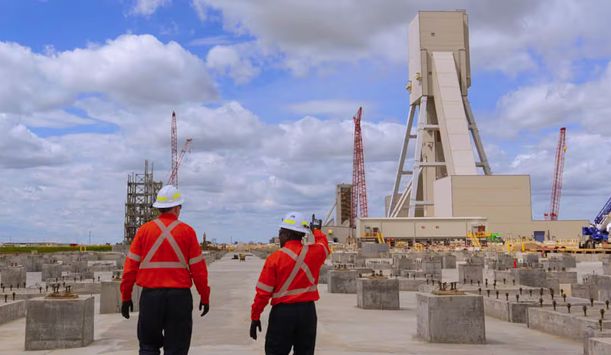
BHP Group Ltd (LSE:BHP, ASX:BHP) reported record copper and iron ore production for the year to June, and said it was on track to achieve unit cost guidance at its major mines.
Group copper output rose 8% year-on-year to more than 2 million tonnes (Mt). Iron ore production from Western Australia reached 290Mt on a 100% basis.
For the coming year to June 2026, copper production guidance is for 1.8-2 million tonnes, in other words, flat at best.
Chief executive officer Mike Henry said: “BHP delivered record iron ore and copper production, which demonstrates the strength and resilience of our business and underpins our ability to deliver growth and returns to shareholders amid global volatility and uncertainty.”
Over the past 12 months, copper production at Chile’s Escondida increased 16%, marking its highest level in 17 years, while elsewhere in the country, Spence delivered record output and South Australia reported production records in June and the fourth quarter.
Steelmaking coal production increased 5% as improved truck productivity offset adverse weather and geotechnical issues at Broadmeadow.
Group capital expenditure guidance remains around US$11 billion for 2026 and 2027.
Capital expenditure for Stage 1 of the Jansen potash project was hiked to a range of US$7 billion to US$7.4 billion, from the $5.7 billion earlier estimate, with first production expected mid-calendar year 2027, back from the previous end-2026 target.
BHP said the estimated cost increase is driven by inflationary and real cost escalation pressures, design and scope changes, and a lower assessment of productivity.
Written by:
Lisa Uhlman
This record is published on behalf of Askari Metals Ltd, a paid client of ProactiveAbout this contentDisclaimer
No investment advice
Share article
(
ASX:AS2
)
Askari Metals: Building a Tier-1 gold portfolio in Ethiopia
Published: 12:22 17 Jul 2025 AEST

Ethiopia, a country known more for its rich cultural heritage than its mineral wealth, is emerging as a hotspot for mining investment. In recent years, the country has attracted considerable attention from foreign investors, thanks to its strategic location, rapidly expanding infrastructure, and favourable government policies that encourage mineral exploration and development. Importantly, Ethiopia is one of Africa’s most promising and underexplored mining regions.
Askari Metals Ltd (ASX:AS2) is one company setting the stage for growth in Ethiopia. With a strategic focus on the Nejo Gold Project in Ethiopia’s Arabian-Nubian Shield, the company aims to unlock significant gold resources in a highly prospective area, relying on its extensive landholdings in a growing mining sector, experienced exploration team and low-cost approach to exploration.
Askari has acquired significant landholding in the underexplored Nejo Gold Project, spanning 1,174 square kilometres in the central-western part of the country. The Nejo Gold Project offers dual commodity potential, with copper mineralisation identified alongside high-grade gold zones.
With a clear strategy to fast-track exploration, Askari aims to unlock significant upside by building on historical data and taking advantage of modern exploration techniques.
Unlocking the potential of Ethiopia’s mineral-rich landscape
Ethiopia is quickly becoming one of the most attractive mining destinations in Africa. Despite being historically underexplored, the country sits on vast untapped mineral resources, with a rapidly growing mining sector now receiving strong governmental support.
Ethiopia has also seen substantial improvements in infrastructure, with a focus on energy, transportation and logistics, all of which benefit mining companies like Askari. The completion of major infrastructure projects, such as the Grand Ethiopian Renaissance Dam, has made the nation a leading player in Africa’s energy sector, providing low-cost power for mining operations.
The combination of a pro-investment government, expanding infrastructure and abundant natural resources has brought increased attention to Ethiopia for mining investment.
Key highlights of Ethiopia’s mining sector:
- Pro-investment government policies: The government has implemented a variety of fiscal and non-fiscal incentives to attract foreign investment, including tax breaks and exemptions on certain mining equipment.
- Strategic location: Situated in the Horn of Africa, Ethiopia serves as a gateway to regional markets, benefitting from its position within the Common Market for Eastern and Southern Africa (COMESA).
- Growing infrastructure: Ethiopia has invested heavily in infrastructure development, with the completion of projects like the Grand Ethiopian Renaissance Dam providing low-cost power for mining operations.
Nejo Gold Project: A Tier 1 geological setting
The Nejo Gold Project is situated along the Tulu Dimtu Shear Zone, one of the last mineral-rich frontier belts in the world. This area hosts several large-scale gold deposits, including the Tulu Kapi Mine, which has an existing 1.7 million-ounce gold resource, and the nearby Kurmuk Mine.
The project offers significant potential to uncover multimillion-ounce gold discoveries, owing to its geological similarity to other world-class gold regions, such as Western Australia’s prolific greenstone belts.
Askari’s Nejo project lies in the same greenstone belt that hosts the Tulu Kapi and Kurmuk mines, a proven gold-producing region with significant upside. The company has already identified multiple high-priority exploration targets, some of which have returned high-grade results from historic drilling, trenching and geochemical sampling.

Importantly, no systematic exploration has been undertaken in the area, meaning the project remains largely untapped and highly prospective.
A clear growth strategy: Fast-tracking development
Askari’s strategy is centred around a focused and cost-effective exploration program aimed at advancing the Nejo Gold Project towards a maiden JORC (2012) mineral resource estimate (MRE). The company has already identified 10 high-priority gold targets, with the Guji, Komto 1, and Komto 2 targets ready for drilling.

Historical data from previous campaigns has demonstrated significant gold mineralisation at these targets, but follow-up exploration has been minimal, providing Askari with an opportunity to accelerate the project’s development.
Key to the project’s advancement is the company’s exploration team, which boasts extensive experience in African exploration and a deep understanding of the geological characteristics of the region. This team has already laid the groundwork for a successful exploration program, which includes trenching, soil geochemistry and drilling.
Unlocking scalable resource potential
The Nejo Gold Project is surrounded by several major gold deposits, and its location within a district-scale landholding adds significant scalability to the project.
Askari is targeting a resource potential of more than 2 million ounces of gold, based on the high-grade mineralisation already identified. The proximity to the Tulu Kapi Mine, owned by Kefi Gold & Copper (LSE: KEFI), also adds strategic value, as it provides access to infrastructure and mining services in a region with established mining operations.
In addition to gold, the Nejo Gold Project also has copper mineralisation, providing Askari with dual commodity potential. The exploration upside is further bolstered by the presence of other high-grade mineralised zones within the project area, with visible gold identified in historical diamond drill cores, and the potential for new discoveries through modern exploration techniques.
Leveraging Ethiopia’s investment-friendly environment
Ethiopia’s mining sector is supported by a government committed to fostering investment and economic growth.
The Ethiopian government has implemented a range of incentives to attract foreign direct investment, including attractive fiscal and non-fiscal incentives for mining companies. The country is also strategically positioned as a member of COMESA, providing access to a vast market and regional trade opportunities.

Experienced leadership and technical team
At the helm of Askari Metals is an experienced team of resource professionals with a proven track record in African exploration and mining.
The company’s chairman, Robert Downey, is a barrister and solicitor with extensive experience advising mining companies on a range of legal and corporate matters. Executive director Gino D’Anna brings more than 15 years of capital markets experience and has raised in excess of $300 million for mining companies in various jurisdictions, including Australia, Botswana, Namibia, and Canada.
The company’s exploration efforts are further strengthened by technical consultant Cliff Fitzhenry, a seasoned geologist with nearly two decades of experience in African mining, and senior exploration geologist Bonifacius Katanga, who brings expertise in critical minerals exploration.
The company’s general manager in Ethiopia, Surafel Wondemagegene, has significant experience in the region, having led exploration teams and discovered multiple gold and precious metal prospects in Ethiopia and Djibouti.
Scaling up and delivering value
Askari Metals is focused on rapidly advancing its projects through systematic exploration to realise the full potential of the Nejo Gold Project. The company’s growth strategy includes not only the development of a high-quality gold resource at Nejo but also the expansion of its landholdings in Ethiopia and other African jurisdictions.
As the company progresses with drilling and exploration activities, it is poised to make significant strides toward its maiden JORC (2012) MRE and potentially uncover a major gold discovery.

Ethiopia’s vast, underexplored mineral resources are making it an increasingly attractive destination for mining investment. Askari Metals is positioning itself to capitalise on this opportunity, with its experienced exploration team and key landholdings in one of Africa’s last major mineral belts. As exploration advances, the company will continue its work to expand the Nejo Gold Project’s potential and deliver long-term value for its shareholders.